

 60
60



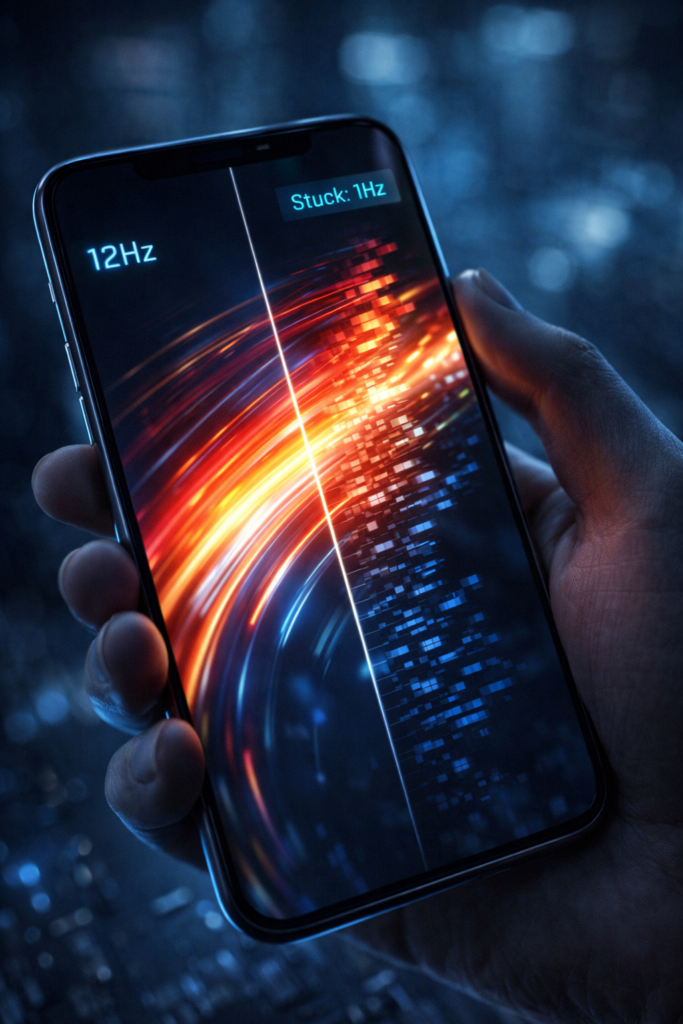
The promise of LTPO (Low-Temperature Polycrystalline Oxide) technology was a revolution for smartphone endurance: a display that could ramp up to 120Hz for buttery-smooth gaming and drop to a measly 1Hz to save battery on static images. But as we move through 2026, many flagship owners are discovering the "LTPO Trap." Instead of a dynamic experience, their premium screens are becoming permanently stuck at the 1Hz floor. The result? A phone that feels like it’s running through molasses, with stuttering animations and unresponsive touch input that no software reboot can fix. This isn't just a bug; it’s a hardware-level failure of the Display Driver IC (DDI), and it’s becoming one of the most common professional micro-soldering services requests in our labs.
To understand why your LTPO display is stuck at 1Hz, you have to look at how the display "talks" to your phone's processor. The Driver IC acts as the translator, telling the pixels how fast to refresh based on the content you’re viewing.
In 2026 flagships, these Driver ICs are being pushed to their absolute thermal limits. To achieve higher peak brightness levels, the IC must manage higher voltages, which generates significant localized heat. Over time, this heat causes "electromigration" or subtle solder fatigue in the high-speed data lanes. When the chip loses its ability to receive the "ramp up" signal from the GPU, it defaults to its lowest power state—1Hz—as a fail-safe. It’s essentially a "limp mode" for your screen.
A screen sticking at 1Hz rarely happens overnight. Most users report a "warning phase" where the display begins to behave erratically before the permanent lock occurs.
You might notice that when you scroll quickly after the phone has been idle, there is a half-second delay before the motion becomes smooth. This "wake-up" lag is often the first sign that the Driver IC is struggling to switch states.
Many users find that their LTPO display functions better at 100% brightness but drops to 1Hz or flickers when the brightness is lowered. This is because the voltage regulation required for low-brightness PWM (Pulse Width Modulation) puts a different kind of strain on the failing IC. We see this frequently during iPhone screen repair specialists and high-end Android diagnostics where the display appears "dead" but is actually just refreshing too slowly for the eye to perceive as motion.
Because the touch sampling rate is often tied to the display refresh rate, a screen stuck at 1Hz will feel like the touch screen is broken. You’ll swipe, and the phone won't respond until a second later, leading many to mistakenly think they need a expert gaming console technicians style controller fix when the issue is actually the glass's "brain."
If your device is currently trapped in 1Hz purgatory, software "fixes" like clearing the cache or toggling "Force Peak Refresh Rate" in Developer Options are usually temporary bandages for a physical wound.
For a definitive diagnosis, getting an Get an instant repair quote for a display assembly or IC repair is the most efficient way to see if your flagship is worth the surgery.
The LTPO display stuck at 1Hz crisis highlights a growing trend in mobile technology: our software is evolving faster than our hardware's physical durability. While 1Hz-120Hz switching is a miracle for battery life, the Driver ICs tasked with this job are the unsung, overworked heroes of your device.
If you’re shopping for a new phone or trying to save your current one, prioritize heat management. Using your phone in high-performance modes while in direct sunlight or using heavy AI features can accelerate IC degradation. Protect your investment by staying informed, and if the stuttering starts, don't wait for the screen to go dark—seek professional help early.
Is a screen stuck at 1Hz a software or hardware problem?
While software bugs can occasionally cause refresh rate issues, a permanent lock at 1Hz that persists after a factory reset is almost always a hardware failure of the Display Driver IC.
Can I fix a 1Hz screen by replacing the battery?
Rarely. While "Low Power Mode" can cap refresh rates, it usually caps them at 60Hz, not 1Hz. If your screen is truly stuck at 1Hz, it's likely a communication failure between the board and the panel, which is more similar to an tablet and iPad display repair board issue.
Why does my phone only stick at 1Hz in the dark?
Low-light conditions require the Driver IC to manage complex PWM dimming alongside the refresh rate. If the IC is failing, it may not have the stability to handle both tasks simultaneously, causing it to default to the lowest refresh rate.
Disclaimer: This content is for informational purposes only. Display repairs involving Driver ICs require specialized tools and microsoldering expertise. Attempting these repairs at home can result in total display failure or battery fire.